Washington, D.C. - Congresswoman Harriet Hageman commemorated America's 250th anniversary on the House floor last week with a special order to reinspire nationwide patriotism.
Watch the speech here, or read the full transcript below:
I rise today to speak about something spectacular, something worthy of a year-long celebration, and something that will shortly be lighting up the skies from sea to shining sea: the 250th Anniversary of the creation of the greatest country that has ever existed.
On July 4th, we will be celebrating our collective birthday, and I am honored to stand on the floor of the United States House of Representatives, in this beautiful Capitol, in this glorious and dynamic city, to describe what that means to me, the lone Representative of the least populated state in our country.
Our experimental Republic, having been born from the ashes of a Middle Ages monarchy, has survived two and a half centuries and is today stronger than ever, with all of us being a testament to what our forefathers envisioned – being a free people, participating in self-governance, with an understanding of the vision and divine intervention that created this country 250 years ago. 250 years that at times have involved struggle, hardship, discrimination, and war, while also yielding 250 years of freedom, opportunity, respect, compassion, and unprecedented prosperity.
250 years of building a truly inspirational legacy that warrants a generational celebration to confirm that Americans have the right to be proud of our country, to celebrate what it means to be an American.
Now this right to celebrate our 250th milestone does not mean that we should ignore or rewrite our history, but that we should look upon that history with a full and accurate understanding of what it means both in terms of our dark periods and our incredible accomplishments.
I will say it again because it bears repeating: America is the greatest country in the history of the world. Despite that fact, there are many individuals, including some who serve in this very body and who are running for office, who claim otherwise, and who seek to tear us apart from within so that they can replace this Republic with the same type of failed states that exist elsewhere in the world. They claim that we have no American culture. They argue that slavery is our original sin, and that we should be forever and only defined by that history. They claim that our forefathers, the founders of this country, are not worth honoring, but should instead be excised from our collective consciousness.
So, while American pride has historically been part of the fabric of our society, there has been an organized move afoot since at least the 1960’s to undermine our reverence for this great country. Those actions have taken several forms, such as claims that America was never great; the rewriting of our history, or slanderous accusations about who we are, what we believe in, and the contributions that we have made to the world. Since we are celebrating 2 ½ centuries of America’s existence this year, I think it is high time that we confront those sentiments head-on and expose such narratives for what they are – an effort to destroy our Republican form of government to make way for the implementation of the failed philosophies, moral bankruptcies, and human suffering found in socialism and Marxism.
Mr. Speaker, I stand before you today to remind everyone as to what has made us such a great country, why our history is worth defending, and to emphasize that the future of America is bright indeed.
It is time that we celebrate America and everything that it means to be American.
Just this past summer we learned that the number of American adults who claimed to be “very proud” of their country reached another record low. In Gallup’s 25-year patriotism survey, just 17 percent, or less than 1 in 5 American adults, reported that they were “very proud” of being an American. The number of adults who claimed to be “extremely proud” reached a 25-year low, and has now fallen to below 60 percent. I hope that by focusing on America’s 250th anniversary – and looking back over our history with honesty and accuracy -- we will reverse these declines.
I am in fact optimistic that those festivities we’ve already enjoyed are currently inspiring a new sense of purpose in our national identity. And I believe we are on the right track to making America proud again. Watching the soccer revelers who are discovering the United States for the first time should make all of us proud. I know it does me.
Gallup’s surveys should cause us to take notice of what a lack of pride in our country portends in the long-term, while forcing us to confront what the sustained attacks on our American identity have done in the past and are doing to us now. Many of our neighbors are asking why patriotism appears to be on the decline when there is so much to celebrate about the United States of America.
What is behind this self-hatred that has permeated many of our institutions? What is the ultimate destination of this downward spiral into despair? What does intentional disparagement mean for our younger generations? The answers to these questions are not a mystery. They lie within the deep dark caverns of our political divisions and are boiling up into the public square by those individuals and organizations who seek to turn us into yet another failed state.
Our excitement for America has been dimmed by accusations of an unacceptable morality, and our self-image has been tarnished by a novel self-flagellation as part of a new revolution. A familiar revolution. A color revolution. A digital revolution illuminating a national dysphoria. A rapid-onset distortion of American identity.
Mr. Speaker, our 250-year quest to become a more perfect union has always involved asking hard questions in self-reflection:
- How do we fulfill the promises of our founding documents in the context of governing this vast country from east to west and north to south?
- How are we maintaining our core values of freedom, justice, and equality?
- How do we couple self-autonomy and liberty with civic responsibility?
- How are we lifting up and caring for our most desperate citizens in need?
We must continuously ask these questions because we must never lose sight of the promise of America. We know that there are aspects of our history during which our ancestors failed to live up to what this country stands for, and I am not standing here today to pretend that there is no shame in parts of our past. Like so many countries around the world, the barbarism and shame of slavery is a stain on our early identity. Slavery is, in fact, an indelible part of the history of almost every country, from Western nations to the Middle East, to South America, to Africa and beyond.
But how we ultimately eradicated that stain is what sets America apart. We overcame slavery’s horror to eliminate this demon in our national spirit. We tore our country apart, with the Union fighting to abolish slavery from our shores. The ultimate victory was a great triumph, and by fighting to uphold our own standards as set forth in the Declaration of Independence and our Constitution, we have had a moral redemption of the American character. Unlike the other countries around the world that had slavery, or continue to practice it to this day, we endured the exorcism of a Civil War. And we emerged to secure a stronger, more equal, more just, and more determined union.
Over 150 years ago, our ancestors fought fathers against sons and brothers against brothers to eradicate slavery. And through the focus, leadership, and determination of the great men and women such as Abraham Lincoln, Frederick Douglass, and Harriet Tubman, righteousness prevailed. Americans are rightfully proud of our demand for justice, freedom, and liberty. These characteristics are part of our national identity. But what do those words mean? Do we define them differently today than in years past? Have we evolved? What does it mean to be “proud to be an American”? I think that we all know, but we have allowed numerous malign influences to take control of the dialogue and to try to convince us that our history is not worth celebrating. And that is why I am on the floor of the United States House of Representatives today.
To remind all of us as to who and what we are and, perhaps as importantly, what we are not despite what has been claimed of late. In my opinion, America250 is the perfect moment to restore our sacred pride, and to challenge the slander of those who despise the freedom of personal responsibility and self-governance. And we have an obligation to be honest about what America is and what it isn’t as we enter the golden age of America’s next 250.
Mr. Speaker, I stand here to remind Americans about how our united history, culture, language, literature, art, music, traditions, and innovations that define us as a nation long predate our Independence. I start by being unequivocally clear: America was born with the very best ideas put forth and memorialized by some of the very best minds.
I want to make it clear, however, that our country itself is far from a mere idea or a state of mind. America is a nation of people who share common values, traditions, history and fate. We have been a charitable people from the beginning. We have long been a blessing to the world because of our culture of giving, hope, perseverance, and redemption. We are united by the Judeo-Christian values that compelled our first ancestors to come to America to pursue their destiny and to create a country based on freedom – freedom of the individual, of religion, and of family.
Our founders articulated the philosophy of what America is in so many different ways. John Jay wrote in Federalist Paper 2: “Providence has been pleased to give this one connected country to one united people – a people descended from the same ancestors, speaking the same language, professing the same religion, attached to the same principles of government, very similar in their manners and customs, and who, by their joint counsels, arms, and efforts, fighting side by side throughout a long and bloody war, have nobly established general liberty and independence.”
That is a message of unity, of brotherhood, of a shared humanity. And we must be careful to always remember those characteristics that we share as our common denominator. This is what makes America, America. The fact that we have a unique shared culture, one that is worth acknowledging, defining, preserving, and protecting. This does not mean that we reject other cultures or traditions. America has, in fact, been one of the most gracious countries in history to welcome people from across the globe to our shores. By inviting those who seek to make our country home, however, we are not obligated to subjugate our American history, culture, and traditions for theirs. We instead welcome them here to partake in and succeed in the American way of life. And we must stop pretending that America is just an idea, or that we have no shared culture worth fighting for.
The moment we give up on America by believing it merely exists as an abstract concept is the moment we forfeit our shared culture as a nation. America has been the most potent force for good in human history. The erasure of the very culture that underlies our success as a country will be a dark moment for all of Western civilization if we allow it to happen. And what better time to celebrate our history, culture and traditions than on this 250th Anniversary, being optimistic that in 2026, while looking both backwards and forwards since Ronald Reagan professed it to be “morning again in America” we will realize that it is a bright, golden sunrise shining over the new horizons of a novel American pax romana, the dawn of a truly Golden Age of America.
The existence of America, to those who came before this country was willed into existence by our forefathers and those willing to die for their noble cause, was a dream: A paradise of freedom away from religious persecution in harmony with neighbors. A place united by the Christian values that championed the family and preserved individual liberty.
One of our nation’s most famous civil rights heroes later articulated what that meant in a speech for the ages in 1963. He shared a dream two miles west of this Capitol, on the grand steps to the monument of the great emancipator. He dreamed, quote, “that my four little children will one day live in a nation where they will not be judged by the color of their skin but by the content of their character.” Dr. King was assassinated five years later. But his words carry his legacy as a living memory. A memory which to be both proud and careful of as a warning about our present decade.
The United States is experiencing many of the same stress tests today that we survived through the 1960s. We are locked in a competitive space race with a nuclear rival. Our foreign policy is wrapped around countering rival communist, fascist, and totalitarian regimes across the world with no respect for human life, value or dignity. Our university campuses are hotbeds of unrest and disunity, with calls to destroy the social contract that has allowed differing groups, religions, and philosophies to not only exist in harmony, but to actually thrive, and for our people to love each other like brothers. We are facing historic divisions in our cities, where anarchy, race riots, and political assassinations have returned.
But, we have faced these trials before. They are the familiar currents of cultural upheaval with a frightening future, an anxious uprising inspired by the demonic impulses of envy and greed embedded in racial, classist, and sexual resentment. These weaponized emotions threaten to divide us further and represent yet another obstacle to conquer on our crusade to deliver a more perfect union. This effort to divide us into ever smaller subcategories of humans, to slice and dice us into the smallest subset possible to further a victim mentality, isn’t designed to strengthen our core as a country, but to conquer us as a united people, and to sully our shared society.
Despite those efforts, the same common denominators that unite the American nation have always been our salvation. And it will be the resurgence of our shared Judeo-Christian values on this 250th anniversary that will save us again.
I come from the Mountain West. Being born and raised in Wyoming is one of the greatest blessings of my life. There are six generations of my family who have called Wyoming home, and we, along with our extended family, have worked tirelessly to build the state to represent the heart and soul of America’s destiny and legacy. We are the nation’s least populated state. But we are a mighty herd at the frontier of the American march forward.
Prairie populism carried the banner of progress forward, a new land of opportunity for freedom’s endeavor, as we united this country from shore to shore. Wyoming was the first state to give women the right to vote, passing the Women’s Suffrage Act on December 10, 1869, a full 50 years prior to the passage of the 19th Amendment granting this right to women nationwide.
Wyoming was a haven for free African-Americans who enriched our cowboy and western heritage, coming to Wyoming to homestead and create communities. We are proud to be the home of the Northern Arapahoe Tribe and the Eastern Shoshone Tribe of the Wind River Indian Reservation, whose cultures and traditions have enriched our collective history. Our pristine national parks and monuments stand as temples of a shining exceptionalism to our respect for the environment, beauty, serenity, and the sublime. The pulsing geysers at Yellowstone beat the heart of a humble people whose character defines the mission-driven stoicism within the American spirit.
The West has always embodied the ultimate destiny of the American people, with its story being told by a proud, bold, patriotic clan in pursuit of prosperity and autonomy. The individual’s birthright to self-determination, declared in our founding documents, characterizes our unapologetic crusade for justice, liberty, and expanding what’s possible.
We reached for freedom westward first, piercing the barriers of distance, wilderness, weather, and hostile conditions. Our ancestors survived against harsh elements and connected a continent. And as we moved westward, we took our culture and traditions with us, including those promises embodied in the Declaration of Independence and Constitution, thereby establishing a country that spans North America from the Atlantic Ocean to the Pacific where ALL people are created equal and endowed by their Creator with certain unalienable rights.
The American dream took root in the homestead on our ancestors’ western crusade for life, liberty, and the pursuit of happiness. The promise of private land ownership became a uniquely American ambition, available to the calloused hands of hungry settlers who built a nation and a culture shaped by shared trials and a common destiny. Today, the American dream stretches coast to coast, united by our heritage to create and sustain a free and just society. And it is this history that draws people from around the world to pursue that American dream.
The world comes to America not because we are corrupt, but because we are not. The world comes to America not because we are racist or sexist, but because we are not. The world comes to America not because of the tired mantra that “diversity is our strength,” but because of our shared culture and history. The world comes to America not because we have nothing to offer, but because we are exceptional.
We enjoy a degree of freedom and opportunity like nowhere else on earth, including in the very European country that birthed America, whose leaders are currently openly renouncing the Magna Carta’s civil contract in order to push policies that will ultimately destroy Western civilization if they are not reined in. There is no “German Dream” or “French Dream.” There is no "Guatemalan Dream or “Haitian Dream.” And it was never the “Somalian Dream.” It is the American Dream: the idea that anyone can realize success regardless of their circumstances, where race, sex, ethnicity, and background pose no barrier to harnessing someone’s full potential.
I am an example of that American Dream. When I was born, I was my parents’ fifth child, and my oldest sister was 5 years old. When they brought me home from the hospital, they had just recently bought a ranch, were over $200,000 in debt in 1962, and had $35 in the bank. This is the home where they brought me as a new infant. Our family continued to grow even after that. We all worked to make that operation a success.
I learned to drive when I was 4 so I could help my father feed. We were on horseback working cows almost before we could count them. We fixed fence, irrigated, did the chores, and milked cows. I graduated from Lingle-Fort Laramie High School with a class of around 30 students. We were taught English Literature, history, science, social studies, calculus and trigonometry, built pig barns, and learned arc welding, although I was not very proficient at the latter. I had brilliant and compassionate educators who taught me to think and presented me with the rich mosaic of the real world so that I could succeed in the real world.
Mr. Speaker, I realized fairly early that I probably wouldn’t make it in the welding field, so I chose to go to a community college on a livestock judging scholarship. I then attended the University of Wyoming, where I have to confess I drank a lot of beer, played a lot of pool, and had more fun than was probably legal. I worked highway construction to help pay for school. I lived in a truck stop one summer.
I later obtained both my bachelor’s degree and law degree, and practiced law for 34 years, representing farmers, ranchers, business owners, gravel pits, municipalities, oil and gas companies, and most anyone who was being persecuted by the federal government. I have always wanted to be a long-haul truck driver when I grow up so that I can travel every mile of this beautiful country and relish being an American. In the meantime, here I am. Why is my history important when discussing why we should be proud of our heritage? Because I am absolute proof that what our forefathers sought to implement has in fact come to pass. We are a government of, by, and for the people.
I am everyman U.S.A. My history and my story are the history and story of tens of millions of people in this country. I came from the most humble of beginnings, living in this house on the Cheyenne to Deadwood Stage Trail, with no telephone and limited access to the outside world, and I am today standing on the floor of the United States House of Representatives, speaking on behalf of the millions of my brothers and sisters everywhere. Only in America is my story possible, and I celebrate that every day. America 250 marks the milestone of a nation born out of grit, a desire for improvement, and a quest for innovation that are ingrained in our pioneer DNA. Our evolution is guided by an unrelenting passion for liberty’s progress, 250 years of being guided by our instincts to confront new frontiers.
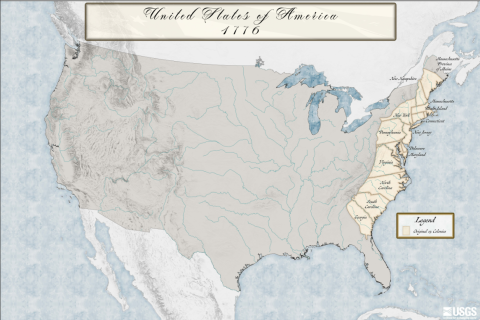
In 1776, our forefathers had already recognized that it was time to throw off the limits of arbitrary boundaries previously established by a European Monarch. The first Americans had already begun pushing west on the eve of our national independence. Daniel Boone captured the nation’s divine early hunger for exploration with a trailblazing expedition across the Cumberland Gap. The millions who followed over the subsequent 250 years have done so in Boone’s footsteps, chasing prosperity by conquering the elements and mapping their own future.
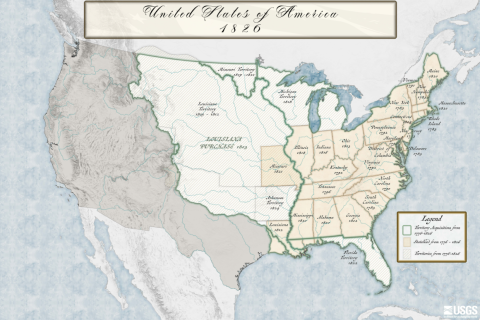
By 1826, our country had already developed a strong taste for expansion after having doubled the landmass before turning 50 years old. The Louisiana Purchase unleashed the budding ambition of American frontiersmen, defining a new era of self-determination by driving further westward. Mountain men like Jim Bridger, John Colter, and Jedediah Smith carried Boone’s legacy into the wilderness. Beaver trappers pioneered the first global economy. The next 50 years featured a mass migration to settle the continent. Farmers, builders, artists, intellectuals, gold miners, business owners, dreamers, second sons, and even storied outlaws moved west to claim their future in the new frontier.
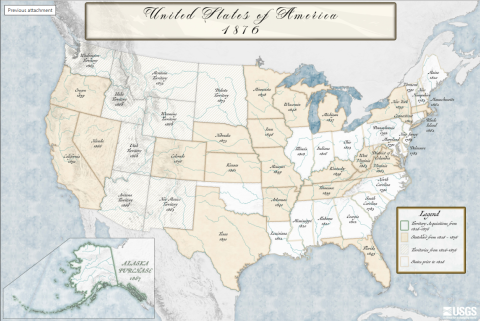
By 1876, a new national hero emerged to represent the truest form of American individualism as our nation settled the West. The lone cowboy riding on the distant horizon staked his claim in the American identity, a male model of resilience epitomizing strength, integrity, and stoicism. The image of his determined drive stays with us as a defining character in American culture, an aspirational figure of self-sufficiency and adventure to guard his herd, his nation, and his neighbor. My own great-grandfather joined a cattle drive in 1878, heading north from Texas, eventually settling in Wyoming, where he lived for the next 60+ years, and leaving a legacy as an honest cowboy and rancher that continues to impact our state to this day. There are many like him in Wyoming and elsewhere, yet another layer in the glorious traditions and history of our great nation.
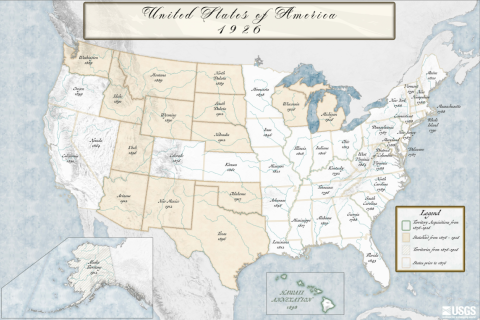
By 1926, the American frontier was transformed by the exponential industrialization of a united continent. New networks of transportation and communication collapsed distance with innovation. Our expansion reached far beyond our shores. Hawaii and Alaska represented the ripe new territories beyond the edge of the western frontier.
America’s desire for exploration and conquering far-distant frontiers escaped into orbit as we approached our 200th birthday. The mission to the moon had just been accomplished by the bicentennial of 1976. The Apollo landings became an instant legacy to our pioneering endeavors, delivering the next generation of frontiersmen in the form of a new American hero defying gravity: the astronaut. His horse of steel and rocket fuel propelled a high-octane expression of American exploration into the future. The new path forward is a trail blazed upward, unlocking space-based industry and a colony on the Moon as America reaches 250.
It was by the will of a collective people, united by a cultural desperation to determine their own story and achieve the impossible, that we conquered the first moon landing. 250 years of a nation reaching forward, westward, and upward, escaping gravity, breaking previous realities, and unleashing endless new possibilities. Our national compass stopped pointing west. It started pointing up, into the heavens. Our celestial neighbors mark the latest boundary of the American frontier. The sky is no longer the limit. In America, Mr. Speaker, it never has been.
We now choose to go back to the moon not because President Kennedy said we should 60 years ago, but because the moon represents the next stop as we continue to realize our manifest destiny.
The stars taunt us as the next mythical paradise beyond our horizon to carry the banner of our cowboy legacy, an otherworldly wilderness for American frontiersmen to tame for God and country. These stars have been on our national flag since our ancestors went to battle for our freedom. They fly again on the wings of heroes blasting themselves to convey America farther than we have ever gone before. Deep human space flight is the ambition of our generation.
We plant our values on triumphant territory in the name of American glory. The banner that waved over Fort McHenry. The flag our heroes raised amid the costly battle at Iwo Jima. The stars and stripes planted by the astronaut cowboy on a distant crater.
For 250 years, the flag has been an early symbol of American vigilance, an emblem of our pride and heroism. In the 1860s, the Gettysburg flag waved among the unbearable noise of war as our ancestors fought to keep the Union together and abolish slavery. Buzz Aldrin and Neil Armstrong would plant the flag in the vast lunar mare known as the Sea of Tranquility, in almost total silence, a century later.
This year, the flag returned to alien gravity, and the stars and stripes that draped our most famous 1980 hockey team waved again at an Olympic triumph over Canada, a miracle on ice in the year of our 250th.
The American flag is the ultimate unifier. We wear them, we hang them, and we pledge allegiance to them as a declaration of commitment to our country, our neighbors, our heroes, our culture, and our history. The colors conceptualize our gratitude for those who were willing to lay down their lives for our great country, and for what it means to be connected to each other as Americans.
They cover the caskets of the brave men and women who paid for our freedom. We honor each other when we honor those service members. The flag has always been the reminder throughout our 250 years of how far we’ve come, how much it cost, and how much is possible. It’s a reminder to be proud of our American heritage, the freedoms we all share, and how a price has always been paid–willingly so–by those who believed in everything that America stands for. 13 men and women have now paid the ultimate dues of American liberty this year in Iran. They join the more than 1 million men and women who gave their lives for our country since 1775. On Veterans Day, we thank those who served and survived.
On Memorial Day, we honor those who died making the ultimate sacrifice. And it is because of them that we are able to celebrate Independence Day. They are why we made it to America250. They did not die for a mere idea. They died for the values embedded in our flag, the ultimate representation of pride, love, and commitment to our great American nation, free and united by the best ideas.
We recently celebrated Flag Day, a day to salute the most common banner of our character. The symbol of our shared identity as Americans in pursuit of life, liberty, and happiness. A star-spangled emblem for hope and harmony. And now, for some reflection.
Mr. Speaker, my colleagues on the other side of the aisle have worked mightily to weaponize our history to indict our nation as irredeemable. Radical academics glorify the 1619 Project so that they may dismiss the miracle in 1620, when our ancestors planted the seeds of our country on their historic voyage aboard the Mayflower, the inaugural expedition westward that would define the direction of the American destiny.
It was they who sailed into existence a nation inspired by our Judeo-Christian values and who began the construction of the “shining city on a hill.” The Pilgrim crusade for the right to self-determination reached a new milestone just 167 years after they arrived on our shores when the founders kicked off 250 years as an independent nation. 35 million Americans trace their lineage to the Mayflower. What a legacy. What a history. What they began based on faith, freedom, and hope has now evolved into a miracle – the miracle of our forefathers creating a country based not on governmental control, but on individual freedom. Today, the left reveres 1619 as what they say is the year of America’s true founding.
The year the first slaves were imported to America has become the defining moment for a new generation of cultural revolutionaries hellbent to tear our society apart. They lionize past pain to drape themselves in a toxic form of victimhood, antithetical to America’s true values. The perpetual hoax that demands that we view ourselves entirely through the lens of racial injustice, however, dismisses our great legacy and history, as does their characterization that America was built for the sole purpose of oppression.
Acknowledging the horrors of slavery does not justify ignoring the greatness of America or counsel against celebrating the accomplishments of Americans from all walks of life. Twisted theories designed to disgrace American exceptionalism come in spite of everything we have done, yet it takes very little imagination to recognize that the world would be a dark place indeed were it not for America. I mean that both figuratively and literally.
In 1879, Thomas Edison lit up the night when he invented the light bulb in New Jersey, soon after visiting Wyoming to witness the total eclipse of the sun and enjoy some of our world-famous fishing. Alexander Graham Bell made the first successful telephone call just three years earlier in Boston. In 1903, Orville and Wilbur Wright changed our reality with the first powered flight across the Carolina sky. American aviators would pioneer jet-age travel within just half a century thereafter.
In 1908, Henry Ford rolled the first Model T out of the garage. His assembly line would unleash the American car as the ultimate freedom machine to explore our wide-open country, while also changing the very nature of manufacturing, thereby altering the world forever. Today, LED smartphones connect places around the globe in a nanosecond. You can charge them in the car or while flying in an airplane.
Mr. Speaker, my mother is 102 years old, and I want you to just think of the changes she has seen in her lifetime. Having grown up on a farm in Minnesota, they spent their days tending the garden, working in the fields, taking care of the animals, chopping wood, and canning food. Because of American ingenuity and the commercial production of affordable and reliable energy, the last 100 years have seen changes unrivaled in human history.
An increase in life expectancy, a decrease in infant mortality rates, central air, warm homes, and abundant food sources produced right here. American innovation and freedom are at the center of these advances that my mother has experienced, and we should be forever grateful to those who have dedicated their lives to making our lives better, both with regard to incredible technological and medical advances, as well as creating the arts and music that we so enjoy. The world’s most consequential technologies are products of America’s advancements: computers, the internet, GPS, flight, fracking, and vaccines are delivered from the laboratory of American democracy. But our form of a Republican-Democracy itself has always been America’s best innovation.
American free market capitalism has done more to relieve human suffering than any other system in human history, making every invention I just mentioned even a possibility. Today, Americans enjoy a level of prosperity and equality like nowhere else on Earth, and like no time in human history. I encourage any skeptics to look at Iran if there’s any doubt, where women are barbarically abused, and gays are thrown off roofs. Marxist countries are no better, with the Cuban people having now been oppressed over 60 years while their government overlords have become filthy rich by exploiting their suffering.
America250 is a reminder of America’s world-changing contributions. Our ideas lifted more people out of poverty than any other civilization that has existed. Our heroism and bravery saved the world from two global wars, and our values inspired hundreds of millions to rise up for liberty. The leftist dogma through which today’s revolutionaries write off history is a national tragedy and must be exposed as the intellectually lazy pablum that it is. The left dons the crown of victimhood to erase what it means to be a country of citizens pursuing a common cause.
They flood the nation with third-world immigrants who do not assimilate to our culture, with their militant refusal to do so tearing the American spirit while feeding waste, fraud, and abuse. They cheer for the breakdown of the nuclear family, while then using the resulting misery as a way to bolster their own power. America has a choice on this anniversary, and we should choose to rally around the same glorious flag that we all recognize in the year of our 250th.
The star-spangled banner reminds us how there is more that unites us as a nation than there is to drive distrust, envy, and anger among neighbors. I challenge every American to wrap themselves in our national colors throughout our historic anniversary. Reject the rainbow banners of identity politics and division. Embrace tradition. Embrace America.
The American Flag is the banner of our crusade under a shared destiny, a call-sign to conquer the frontier, and a symbol of our national redemption. I am calling on all Americans to embrace this once-in-a-generation chance to be a part of this historic celebration. Honor our war heroes. Practice gratitude for their service. Make patriotism contagious. Redouble your efforts to make your own communities places of wholesome, caring, productive, and embracing enjoyment.
Mr. Speaker, celebrating everything we made possible everywhere is impossible, because there is simply too much to be proud of. In fact, our national anniversary cannot even fit in a single day on July 4. America250 has become a year-long celebration coinciding with the kick-off of a decade of global sports on American soil. In two years, the Los Angeles Olympics will follow the World Cup, welcoming spectators from around the world to experience America as we begin another chapter in our 250-year journey.
Europeans who have come over for the World Cup have flooded social media with expressions of wonder and amazement about all the greatness that is America, including the abundance of resources and the benefits of a high-trust society. It’s sad when some of our own neighbors fail to see it, but foreign visitors can. This summer, Washington, D.C. will host the INDYCAR series to race the Freedom 250 Grand Prix through our nation’s capital. This high-octane expression of American patriotism joins the endless parade of cross-country events as an encore for our Independence Day celebrations.
While Americans commemorate our historic anniversary with the unapologetic and bombastic celebrations characteristic of our shared identity, there are countless ways that we can celebrate with our neighbors every day. Most importantly, celebrate America and being an American. And continue breaking bread with your families and neighbors. Our history has not been perfect. But there is so much to be proud of as a nation, as Americans.
Our achievements are like the scope and size of the universe barely scratched by the Artemis program: they are simply too great for us to fully appreciate unless we are willing to actually study who we are, what makes us different, why America has succeeded as a beacon of hope and renewal, and why we must fight every day to make sure that the next 250 years are even more spectacular than the last. America is almost too big and too beautiful to understand the reach of our exceptionalism. But we can do it when we put our minds to it by reminding ourselves of the glorious things that have been wrought over the last 250 years because America exists.
America has exceeded the limits of the imagination and expanded beyond the wildest dreams of our forefathers and founders when they began to put together a country that would ultimately become the American Dream. We are one big, beautiful nation, united under one God, indivisible, with liberty and justice for all. In less than two weeks from today, the sun will rise on the first day of America’s next 250.
God Bless America. Yes, thank you, God, for blessing America. I yield back in gratitude for being able to serve in this august body of men and women dedicated to protecting and defending our Republic.